
What We Learned at the DSC Conference 2026
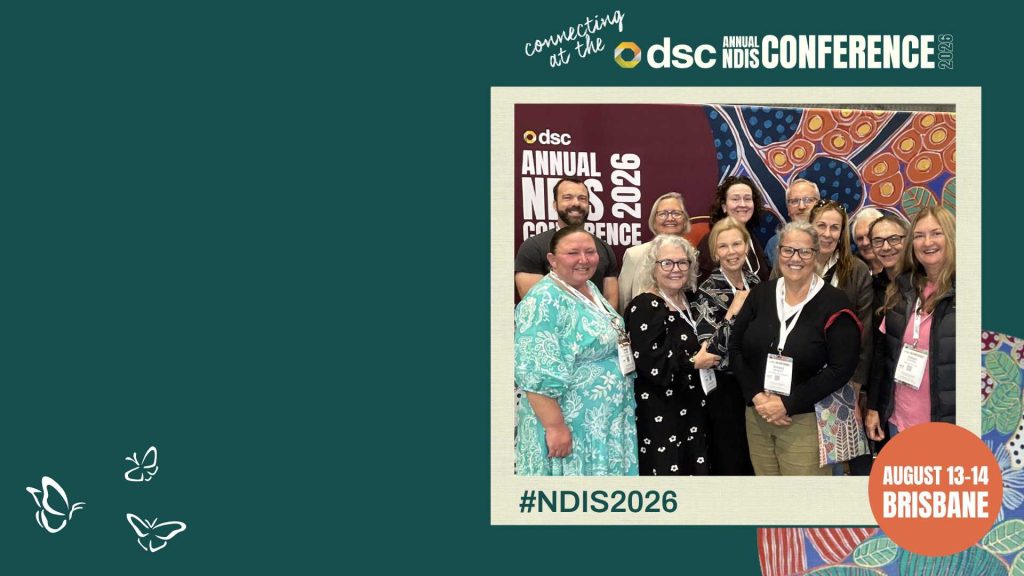
In August, a few members of the Inclusion Tree team travelled to Brisbane for the DSC Disability Conference. For those unfamiliar with DSC, it began in 2015, when the NDIS was first rolling out. More than a decade on, DSC is still fiercely pro-NDIS, but they’ve shifted their focus. Rather than waiting for systemic change, they’re working on what can be done right now to support a strong, healthy and productive sector.
Their annual conference brings the sector together, and this year more than 1,500 people joined in. The conference is designed for a sector ready to lead its industry; they did this by offering practical solutions to common challenges, concrete examples of quality support in practice, honest intel about what’s coming, and space to connect with the people driving reform. Our team came back with a lot to think about, and we wanted to share what they learned with you.
A More Disciplined, High Integrity NDIS
The message across both days was that the NDIS is entering a period of tightened regulation, mandatory registration, and evidence-based practice. New Support Needs Assessments will drive future budgets and eligibility, the definition of permanent disability will be applied more strictly, and mandatory registration will apply to all high-risk supports. This includes self-directed supports, which will be implemented by 2030. New practice standards, penalties and fines for non-compliance are also on the way, and Support Coordination and Plan Management are expected to transition to government-commissioned providers by October 2027.
Integrity is the new core reform pillar; the government has set up a fraud task force, and the media’s dramatic claims of “20% fraud” were clarified as an actual loss of around 2–3% across all social services, with SIL remaining the highest-risk service area. The sector’s narrative also needs to shift toward positive stories, improved public trust, and a professional workforce identity. For organisations like ours, that means strengthening integrity systems, audit readiness, and transparent reporting, particularly in high-risk supports.
Workforce Competence Is Now a Strategic Risk Domain
One of the strongest messages of the conference was that training alone does not guarantee quality. Competence must be demonstrated across every role, monitored through team leaders, in-person audits, observation and continuous learning. Experience does not automatically equal competence, and competency needs to be regularly reassessed and verified through multiple forms of assurance. Speakers pointed to high-risk industries like aviation as a model: high intensity supports deserve the same rigour.
The principle shared on stage was simple: Know, Show, Do, Escalate. There was also real concern about a new practice called “Shadow AI”. This is where staff use AI tools without organisational governance; this gives us a clear call to set boundaries around technology, privacy and safe integration.
Quality, Safeguarding and Culture
Quality is shifting from a compliance exercise to observable, outcome-focused, measurable practice. Safeguarding must be intentional, inclusive and grounded in the “why”. While this has been a source of stress in our industry, it is unfortunately something we will now need to adapt to and make the new processes work in our favour.
Evidence-based psychosocial and functional outcomes are now expected, and quality systems must adapt to new staff, new standards and real-world execution. One quote from the conference that we did like that gives us a bit of hope was “compliance can be fun, purposeful and embedded in culture rather than driven by fear.”
Culture was a dominant theme across both days. Reflective practice was presented as a tool for cultural improvement; inclusion must be coherent across the whole organisation rather than tokenistic. Kindness, respect and psychological safety were named as core values. This is good, as it shows that the sector is deliberately moving away from fear-based compliance toward purposeful, joyful practice, with a focus on genuine inclusion, meaning real cultural alignment, not symbolic gestures.
Children, Families and Foundational Supports
Early intervention and family capacity building are moving forward significantly. Foundational Supports are expanding nationally, though Queensland is not yet supporting the model. The Thriving Kids Framework, commencing in October 2026 for children aged 0–8 with mild to moderate support needs, will be delivered through state and territory systems. The 2025 Children’s Framework requires trained parent peer workers and data-driven impact. For organisations supporting children, aligning with these frameworks and demonstrating measurable developmental outcomes will become essential.
The Reform Roadmap and What's Changing
Several major reforms are scheduled over the next five years, and they will significantly reshape the provider landscape. Commissioned Navigators commence on 1 July 2027. Mandatory registration for all providers delivering high-risk supports will be phased in between 2027 and 2031. Differentiated pricing is expected to create roughly a 10% pricing reduction for non-registered providers, and new anti-promotion provisions will limit provider influence and marketing practices. The Technical Advisory Group is developing advice on future Functional Capacity Assessment models, with recommendations due by the end of 2026.
Planning reform is equally significant. A new planning framework informed by ICAN principles will be trialled with approximately 10,000 participants before broader implementation from April 2027, potentially taking up to four years to fully transition. Plans are expected to become longer-term, spanning three to five years, with allied health professionals and specially trained NDIA assessors conducting assessments.
SIL, Allied Health and the Road Ahead
The focus was on the future direction of Supported Independent Living. Emerging practice areas include Active Support, leadership capability, supported decision-making, tenancy rights, evidence-based quality monitoring and continuous workforce competency assessment. Client Advisory Committees and inclusive governance models were highlighted for their positive links to participant wellbeing and quality of life, and polypharmacy reviews every 6–12 months are being recommended.
The allied health environment is also expected to change significantly. Pricing reforms and ICAN-related planning changes, a stronger focus on quality outcomes, wraparound service delivery models, and greater integration between allied health and direct support services are all coming. Consolidation opportunities will emerge as smaller or less efficient providers struggle to remain sustainable. The strategic advice was clear: double down on quality or diversify, develop active referral networks, strengthen relationships with Support Coordinators and LACs, build presence in surrounding communities, and demonstrate measurable outcomes.
Participant Voice, Cultural Safety and Workforce Wellbeing
Several presentations reinforced the direct connection between participant involvement and quality outcomes. Inclusive governance improves participant wellbeing; people with disability should influence organisational decision-making; and participant voice must be embedded, not merely consultative.
We heard powerful examples of community-led models, including Miwatj Health Aboriginal Corporation, which delivers NDIS supports across Arnhem Land and remote Aboriginal communities, blending Aboriginal cultural approaches with government requirements through the NDIS Results and Outcomes Measurement framework.
Workforce wellbeing also emerged as a significant strategic issue. Emotional exhaustion remains widespread across the sector; staff favour face-to-face learning and mentoring, and wellbeing improves through human connection, peer support and work-life balance. Organisations need to understand the root causes of burnout rather than focusing solely on symptoms. Lessons from military and other high-stress professions may help develop resilience frameworks.
What Providers Should Be Doing Now
Across multiple sessions, presenters encouraged providers to move from reactive service delivery to deliberate strategic management. That means no longer saying yes to everything, making transparent decisions about service offerings, clarifying organisational risk limits, understanding what participants genuinely value, involving frontline teams in reform readiness, empowering frontline leaders, and testing future business models before funding changes occur.
The providers most likely to succeed will demonstrate quality outcomes, invest in leadership capability, build strong community relationships, maintain financial and operational discipline, adapt quickly to reform, and remain participant-centred while operating sustainably.
Our Takeaway
The strongest message from DSC 2026 was that future success will belong to organisations that can demonstrate quality, outcomes, capability and integrity and not simply compliance. The next phase of the NDIS will require providers to be registered and accountable, evidence-driven, participant-led, culturally responsive, competency-focused, strategically adaptive and operationally sustainable. For boards and directors, governance is moving beyond compliance oversight toward active stewardship of quality, participant outcomes, workforce capability and organisational resilience.
One caution that resonated with us:
“As participant numbers face significant cuts, providers may lose sight of participant retention, further exacerbating the “bleed”. It’s critical to maintain quality service delivery while reinforcing the positive elements: a person’s progress, their milestones and their journey.”
It’s equally critical to build partnerships with like-minded providers to ride the wave of change together. As poorly managed providers look to offload participants, we want to be known as a warm, trusted organisation that can take on and continue to support those participants.
We left Brisbane feeling informed, challenged and genuinely energised. The sector is changing quickly, but the organisations that lead with quality, integrity and heart will be the ones still standing.
