
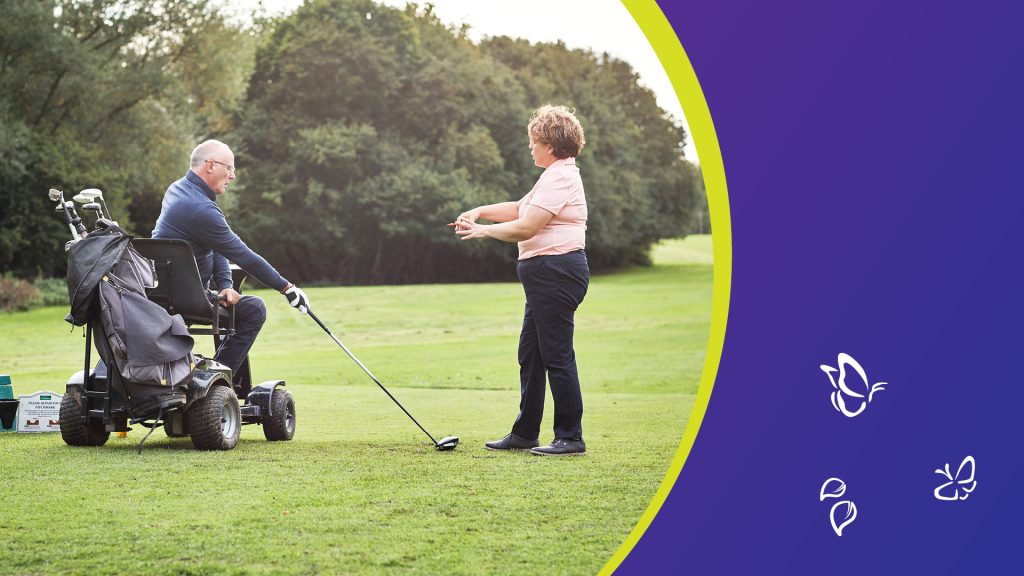
Assistive technology (AT) is so much more than just equipment; it’s a gateway to independence, inclusion, and opportunity. The World Health Organisation defines assistive technology as an umbrella term for assistive products, systems, and services that help maintain or improve an individual’s functioning in cognition, communication, hearing, mobility, self-care, and vision.
From simple tools to complex systems, assistive technology can range from:
The key principle? Assistive technology helps you do things you can’t do on your own, or helps you do things more easily and safely.
The need for assistive technology is far more common than many realise. According to the World Health Organisation:
Globally, more than 2.5 billion people need at least one assistive product. With an ageing population and a rise in noncommunicable diseases, this is expected to reach 3.5 billion people by 2050.
World Health Organisation
Most people will need assistive technology at some point in their lives. While some may require it temporarily, such as after an accident or illness, others may need it throughout their lives.
Assistive technology is most needed by:
The right assistive technology can transform lives, not just for the user, but for their families and communities too. Here’s what the research shows:
For children: Early provision of hearing aids supports language and communication development, limiting negative impacts on education, future employment, and community participation.
For mobility: Appropriate wheelchairs facilitate access to education and employment while reducing healthcare costs associated with secondary complications, such as pressure sores.
For health management: Therapeutic footwear for diabetes reduces foot ulcers and prevents amputations, reducing the burden on healthcare systems.
For ageing: Timely provision of assistive technology helps older people live independently and safely at home for as long as possible.
The broader benefits are undeniable; assistive technology enables inclusion and participation in family, community, and all areas of society, including political, economic, and social spheres.
The NDIS provides funding for assistive technology that meets the reasonable and necessary criteria. But understanding how the funding works can feel overwhelming.
Let’s break it down.
The NDIA uses three cost categories for assistive technology:
Low Cost AT
Under $1,500 per item
Example: Continence products, non-slip bathmats, walking sticks, basic shower chairs
Where Funding Sits: Core – Consumables budget
Mid Cost AT
$1,500 – $15,000 per item
Example: Standing hoists, custom shower chairs, ankle-foot orthotics, some power wheelchairs
Where Funding Sits: Capital budget
High Cost AT
Over $15,000 per item
Example: Custom-made wheelchairs, complex communication devices, ventilators
Where Funding Sits: Capital budget (quote required)
The NDIS also considers the risk level of assistive technology, which determines the advice you need before purchasing.
Low risk AT products are:
Higher risk AT products may be:
Important: Some items are considered higher risk, even if they’re low-cost, such as bed poles and weighted blankets, which require professional advice to ensure safe use.
The evidence required depends on the cost and risk level:
The NDIS doesn’t fund:
Navigating assistive technology funding can be complex, but you don’t have to do it alone. Our Support Coordinators at Inclusion Tree are here to guide you every step of the way
1. Understanding Your Needs and Goals
We start by listening. Your Support Coordinator will work with you to understand:
2. Connecting You with the Right AT Advisors
For higher-risk or higher-cost AT, you’ll need professional advice. We can:
3. Navigating the Evidence and Funding Process
Paperwork shouldn’t stand between you and the support you need. We’ll help you:
4. Exploring Your Options
Sometimes the best solution isn’t buying new. We’ll help you explore:
5. Choosing Providers and Comparing Quotes
With your AT advice in hand, we’ll help you:
6. Supporting Setup and Training
Getting the equipment is just the beginning. We’ll help ensure:
7. Planning for Maintenance and Repairs
Assistive technology needs looking after. We’ll help you:
8. Reviewing and Adapting
Your needs may change over time. We’ll help you:
Sarah’s Story: Sarah needed a powered wheelchair but wasn’t sure where to start. Her Support Coordinator connected her with an occupational therapist for assessment, helped interpret the recommendations, and compared quotes from three suppliers. The result? Sarah got the right chair with the features she needed, without the stress of navigating it on her own.
Michael’s Journey: Michael’s son needed a communication device. His Support Coordinator explained the evidence requirements, helped gather reports from his speech pathologist, and ensured the funding was included in his next plan. When the device arrived, they arranged setup and training sessions.
Eleanor’s Experience: Eleanor was struggling with daily tasks as her mobility declined. Her Support Coordinator identified low-cost AT options (shower chair, handrails, large-print labels) that could be purchased immediately from her existing budget, while also arranging an assessment for mid-cost equipment for the future.
Ready to explore how assistive technology can support your goals? Here’s your pathway:
At Inclusion Tree, we believe that assistive technology is about possibility, not limitation. We’re here to help you navigate the NDIS with confidence, ensuring you get the support you need to live the life you choose.
Our Support Coordinators bring:
Contact Inclusion Tree today to discuss how we can help you find and fund the right assistive technology for your needs.
Whether you’re exploring options for the first time or need help with a complex AT request, our Support Coordinators are here to help you unlock independence, inclusion, and opportunity.

We acknowledge the connections of First Nations People of Australia to the land, sea and community on which we live and work. As custodians of this sacred land we respect and acknowledge Elders, past, present and emerging.