
Reader discretion; this story mentions drug usage, exploitation and racism
At Inclusion Tree, we’re driven by a core belief: lasting change begins with safe, stable housing. Insecure, unsafe, or non-existent housing undermines both physical and mental well-being. Ensuring people have a secure roof over their heads is the foundation for a flourishing life.
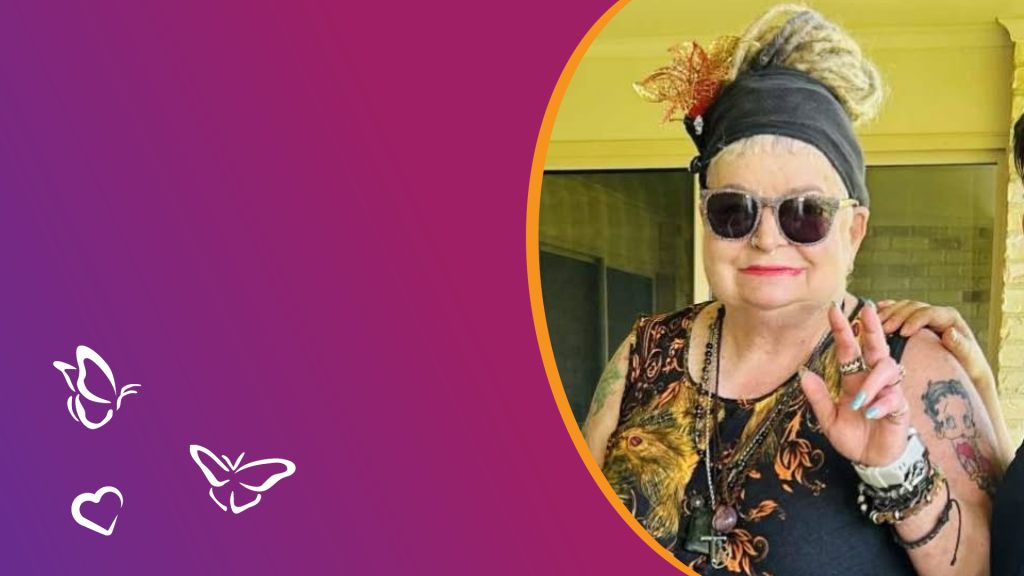
We recently sat down with Rhonda, one of our participants, and her Support Coordinator, Marty. We wanted to hear from Rhonda about her new living situation and how it has positively impacted her quality of life. Rhonda has gone from living in her car to an unstable shared house, to now a place she can call home, with the support she needs and where she can feel safe.
Rhonda’s life has had many ups and downs; she has worked on a trawler, sailed around Australia and spent time overseas. However, she has also experienced homelessness, drug dependence, Isolation and theft.
Something most people don’t understand about homelessness is that the “Visible Homeless”, this being people sleeping on the streets, only makes up a small fraction of the homeless population. A larger part of the homeless population is the “Invisible Homeless”; this looks like people sleeping on their friend’s lounge chair, living in a camper, or even sleeping in a car. This was the situation Rhonda found herself in not that long ago.
“I was living in my Toyota,” she says. “Trying to find somewhere decent to live for me and Tyrone (her son)”.
Luckily, Rhonda was able to secure a more permanent living arrangement following an inheritance allowing Rhonda to purchase her own home. This was meant to be a fresh start, an opportunity for some stability that would allow her and her son to build a better life. However, this wasn’t the case, as the lack of support she received while in the house, coupled with others who sought to take advantage of Rhonda’s situation, led her to move out.
Rhonda recalls that Mitch and the other so-called friends moved in, took drugs, and started shooting up speed.
Marty adds: “As a result, we got complaint after complaint from neighbours. All we could do was keep calling the police. It was really hard to keep supports viable because it was so dangerous.”
Keeping supports, that would go to the house became increasingly difficult, both from the implied threat others imposed on staff and from the safety hazard posed by leaving used needles lying around the house, which cleaners would often find.
Rhonda also mentioned that Mitch and the others often stole from her, taking her clothes and valuables. She was trapped in an environment that wore away at her and her son constantly, with very little she could do about it because the systems that be didn’t allow for it.
During this time, Rhonda also needed to go to hospital to have a toe amputated. While this dark turn seems like the culmination of tragedy, there was a silver lining. It allowed our team to arrange a planning meeting with the NDIS, resulting in Rhonda being able to increase her funding and access Supported Independent Living (SIL) Funding.
Rhonda now lives in a much safer home with a more attentive provider; her son still lives in the same house in Lismore. However, the other people who were taking advantage of his living arrangement have been removed and prevented from returning, resulting in a greater quality of life for both.
When we asked Rhonda what home means to her, she said, “It means somewhere to live.”
But it’s a little more than that; she told us about the meals she can now enjoy, being sure she can have breakfast, lunch, and dinner every day.
“They cook me yummy breakfasts. Bacon, eggs, tomato and cheese.”
Many of her support workers are Filipino, so they often cook special meals for her that she absolutely loves. They also, at times, do simple, kind gestures for Rhonda; recently, one of them painted and decorated Rhonda’s nails. These are simple human gestures that make Rhonda feel seen and valued as an individual.
Having a stable environment has also given her time to work on skills and develop hobbies that she is passionate about. In her spare time, Rhonda enjoys making dream catchers and teaching herself to play the guitar. Rhonda shared that she has a deep love of music; she enjoys attending live music festivals when she can afford them and loves classic rock artists such as Led Zeppelin, Deep Purple, and Nirvana.
Being Aboriginal, we wanted to know how that has shaped her worldview. Her response was quite sharp: “It’s given me a lot of racism.”
This was clearly a pain point for her, and we didn’t want to push too much, as people with a disability are more likely to experience abuse and exploitation; the likelihood is increased for First Nations people and again if they are homosexual, which Rhonda also is.
But when we asked whether there were any positives, she told us an interesting story.
Rhonda told us about her experiences while camping at Mount Warning; she was able to commune with the spirits of past elders who warned her to avoid a property she was planning to stay at. They told her that there had been a murder and to avoid the place; whether it was intuition or something else, Rhonda took the experience to heart and did as the Elders adviced.
For Aboriginal people, the concept of communing with the spirits of the deceased is possible through “The Dreaming,” as death is not seen as an end but rather a transition: the spirit of the deceased leaves the body and embarks on a spiritual journey. Furthermore, “The Dreaming” is not a dream realm most assume it is; rather, it is a complex, all-encompassing reality that spans all locations in space and time, a constant cycle of connecting the past, present, and future. A another term for “The Dreaming” is the “Everywhen”, a place where everything happens all the time.
In addition to being an Aboriginal person, Rhonda is a proud member of the LGBTQ+ community. While she admitted that she isn’t as involved in many mainstream spaces, there are two groups she regularly spends time with: the Radical Fairies and Tropical Fruits.
Tropical Fruits is an LGBTIQ+ Community group operating in the Northern Rivers that holds regular events that are self-funded, independent, and run by volunteers. They run a number of events throughout the year with the goal of celebrating the “Rainbow Region”, that is, their colourful name for the Northern Rivers.
The Radical Faries, on the other hand, are a more inwardly contemplative group. While they may be a much larger international group, they enjoy a looser affiliation with one another, focusing more on providing a safe place for LGBTQ+ members in their local communities. Radical Fairies have been around since the 1970’s and embody the new age spiritual movement as well as more progressive ideologies.
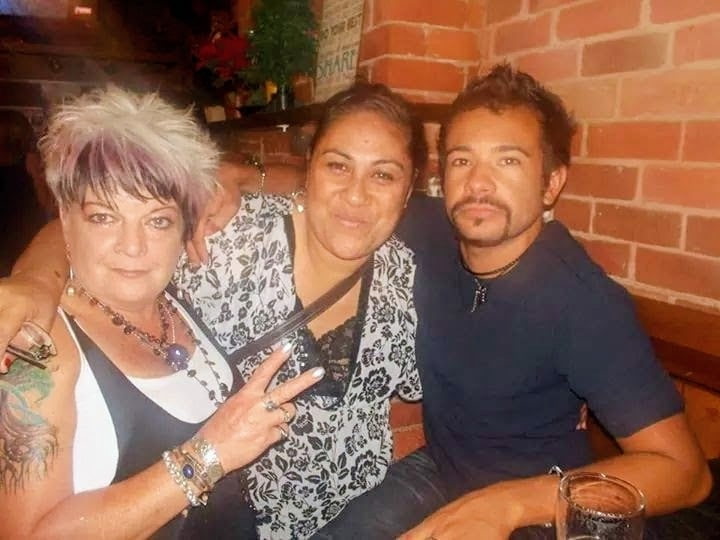
We asked Rhonda, “If you could wave a magic wand, what would your next chapter look like?” Her answer surprised us.
“I wouldn’t change much,” she says, “because I’m going to write a book.”
The things she shared with us showed that Rhonda has lived a very adventurous and unique life. She’s been to Burning Seeds in Matong State Forest, Arnhem Land, The Cook Islands, Thailand and New Guinea. These might not seem like outstanding travels, but some of the sordid details that Rhonda shared might be a bit too… salacious for this blog post. Needless to say, they are not what your average tour group would be getting up to, and you will have to wait for her book to come out to read about the exciting details.
Besides her leisure time, Rhonda’s work life is also out of the ordinary. For years she worked on a fishing trawler, which allowed her to travel all around Australia with her dog.
“I love being at sea. The calmness and the tranquillity, the sunsets and the sunrises are beautiful.”
When we asked what she wants people to take away from her book, she said:
“A laugh. Because it’d be quite funny, some things I’ve done.”
We asked her what advice you would give to others who might find themselves in your situation. She didn’t mince words or offer any light statements, just simply: “Don’t take hard drugs. Because it will ruin your life.”
This is one of Rhonda’s biggest regrets; a choice she made when she was younger that still darkens parts of her life. However, she has managed to carve out a small space just for herself, with friends and family living close by.
Rhonda’s story isn’t neat; it doesn’t wrap up at the end with a nice bow. She still has things she needs to work through and needs space to heal. But now, with the right supports and a stable home, she can start that process and build herself up.
She has new friends who match her style and offer a positive influence. She also has some old friends who meant so much to her; thanks to the new home, she has been able to reconnect with a girlfriend she drifted apart from. One that knows her well, “my whole history”, Rhonda describes, and being able to do so has given Rhonda a powerful feeling of pride.
Today she looks forward to community events, local markets and the odd music festival here and there.
Having the right supports doesn’t undo Rhonda’s past, but they give her a foundation to build a better present and, with time, allow her to build a better future for herself.

We acknowledge the connections of First Nations People of Australia to the land, sea and community on which we live and work. As custodians of this sacred land we respect and acknowledge Elders, past, present and emerging.